Have you ever woken up from a dream that felt so emotional it stayed with you for hours, sometimes even days? Maybe you felt fear, relief, sadness, love, or confusion—but couldn’t fully explain why.
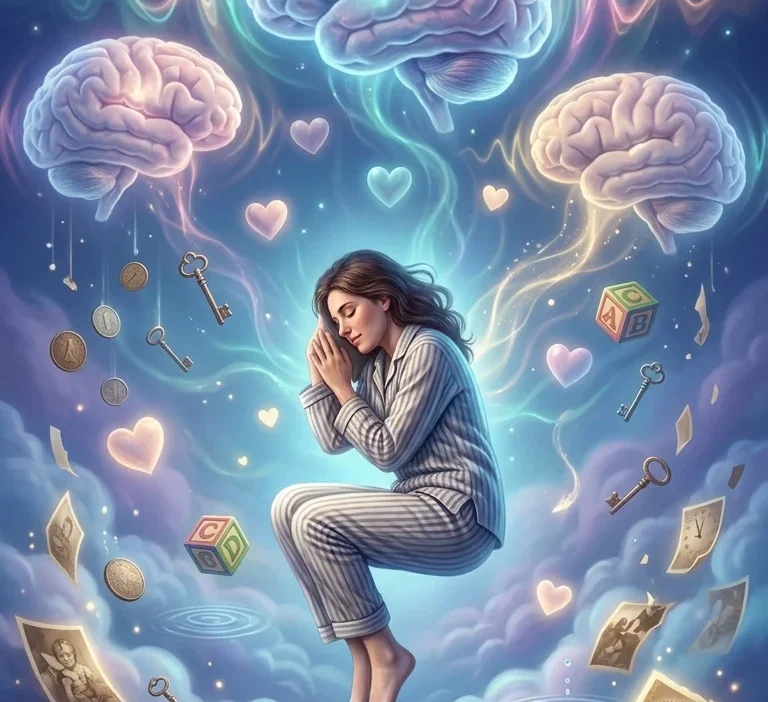
That’s because something powerful is happening inside your brain while you sleep. Your mind is not resting passively. It is actively processing emotions, organizing memories, and trying to heal psychological stress.
In 2026, modern neuroscience has made one thing increasingly clear: dreams are not random stories. They are deeply connected to emotional regulation, memory processing, trauma healing, and mental balance.
Understanding how dreams process emotions can completely change how you view sleep—not as downtime, but as your brain’s most important emotional recovery system.
This guide explores the science, psychology, theories, real-life examples, cultural meaning, and modern AI-driven insights behind emotional dreaming.
What Does It Mean That Dreams Process Emotions?
Dreams are your brain’s natural emotional processing system.
Every day, your mind collects emotional experiences—stress, happiness, fear, excitement, embarrassment, and uncertainty. But your brain cannot fully process all of this while you are awake.
So during sleep—especially REM sleep—it begins organizing these emotions.
This helps your mind:
- Reduce emotional intensity
- Separate memory from emotion
- Process unresolved feelings
- Improve emotional clarity
- Restore mental balance
Simply put:
Dreams are your brain “digesting emotions” overnight.
Are Dreams a Way of Processing Emotions?
Yes. Strong scientific evidence supports this idea.
Dreams act like emotional simulations. Instead of experiencing emotions in real-world situations, your brain replays them internally in symbolic form.
For example:
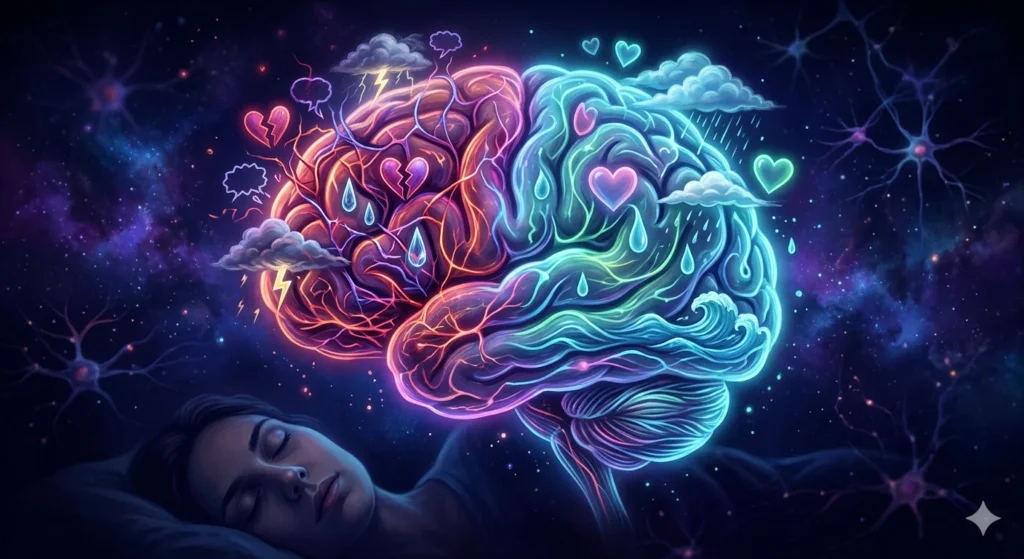
- Stress → being chased
- Fear → falling
- Emotional conflict → arguments in dreams
- Loss → separation scenarios
Your brain is not predicting events. It is processing feelings.
Why Do We Dream? (Modern Scientific Theories 2026)
Modern neuroscience has developed several theories explaining dreaming, including findings often discussed in why do we dream pubmed research.
1. Emotional Processing Theory
Dreams reduce emotional intensity and help regulate mood.
2. Memory Consolidation Theory
Dreams strengthen important memories and remove irrelevant ones.
3. Threat Simulation Theory
The brain rehearses dangerous situations to improve survival instincts.
4. Predictive Processing Theory
Dreams simulate future possibilities based on emotional learning.
These theories are commonly used in why do we dream presentation materials in psychology courses.
The Neuroscience Behind Emotional Dreaming
During sleep, the brain shifts into a unique emotional state.
Highly active:
- Amygdala (emotion center)
- Hippocampus (memory center)
Less active:
- Prefrontal cortex (logic and reasoning)
This imbalance is why dreams feel:
- Emotional
- Illogical
- Symbolic
- Intense
- Sometimes confusing
Your brain is prioritizing emotion over logic.
REM Sleep Emotional Processing Explained
REM sleep emotional processing is the stage where most emotional dreaming happens.
During REM sleep:
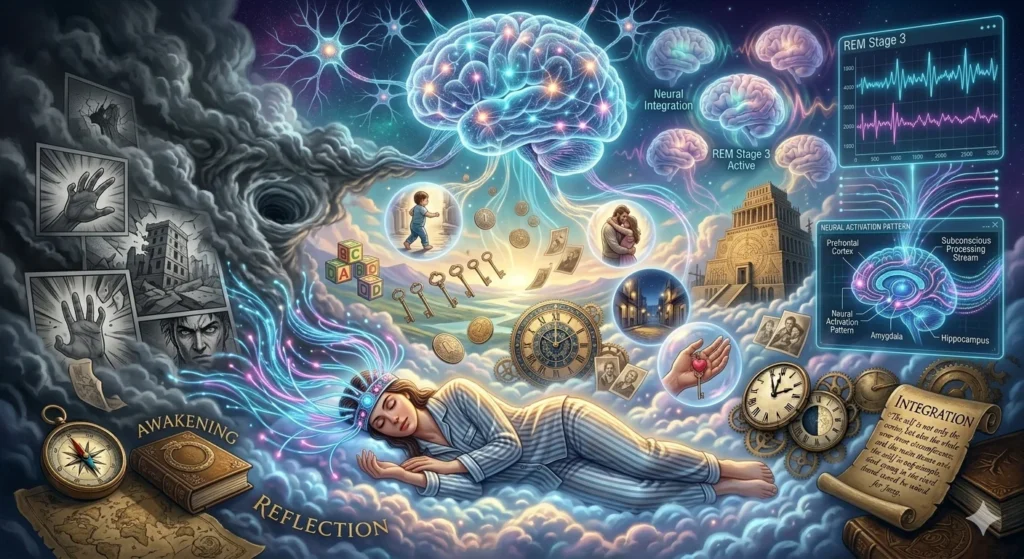
- Emotional memories are replayed
- Stress hormones decrease
- The brain reorganizes emotional responses
This allows painful experiences to lose intensity over time.
Evidence That We Dream to Forget
Scientific models suggest:
Evidence of an active role of dreaming in emotional memory processing shows that we dream to forget
But this does NOT mean deleting memories.
It means:
- Removing emotional pain
- Keeping useful learning
- Reducing psychological burden
This is why painful memories often feel less intense after time passes.
How Dreams Process Emotions Step by Step
Step 1: Emotional Input During the Day
Your brain collects emotional experiences from daily life.
Step 2: Sleep Onset
Brain begins organizing emotional data.
Step 3: REM Activation
Emotional processing becomes active.
Step 4: Dream Construction
Emotions are converted into symbolic stories.
Step 5: Emotional Release
Stress is reduced through dream scenarios.
Step 6: Integration
You wake up with improved emotional balance.
Dreams Processing Trauma
One of the most important roles of dreaming is trauma healing.
Dreams processing trauma helps the brain revisit painful memories safely.
Common examples include:
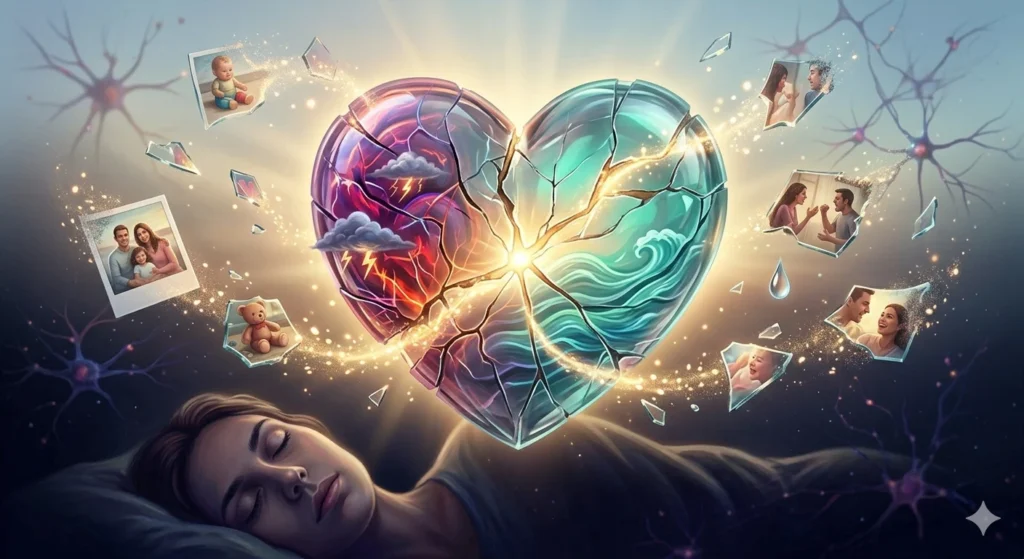
- Loss of a loved one
- Breakups
- Accidents
- Childhood trauma
- Emotional shock
These dreams may feel intense but often support healing.
Emotional Dreams That Wake You Up Crying
Some dreams are so emotional they wake you in tears.
This happens because:
- Emotional brain is highly active
- Stress is being released
- Emotional memory is being processed
These dreams often indicate:
- Emotional release
- Healing progression
- Psychological detox
Many people feel lighter afterward.
Dreams and Emotions in Psychology
The relationship between emotions in dreams is a major research area in psychology.
Dreams often reflect:
- Hidden fears
- Suppressed emotions
- Emotional conflicts
- Internal desires
Popular culture, including the idea behind an emotions and dreams movie, often reflects how deeply emotional dreams feel in real life.
Why do we forget 90% of our dreams?
Because memory systems behave differently during sleep.
Reasons include:
- Low activation of memory encoding areas
- Rapid waking transition
- Brain filtering unnecessary information
However, emotional impact remains even if details fade.
Do dreams reflect reality?
Not literally.
But they reflect emotional reality.
Dreams reveal:
- How you feel
- What you fear
- What you desire
- What you avoid
They are emotional mirrors, not future predictions.
Psychology Behind Dreams About Someone
The psychology behind dreams about someone shows that dream characters often symbolize emotions.
Examples:
- Ex-partner → unresolved emotions
- Friend → trust or support
- Stranger → unknown aspects of self
Dreams use people as emotional symbols, not literal representations.
Dream Theorists Who Changed Psychology
Freud’s Method of Dream Interpretation
Freud believed dreams reveal:
- Repressed desires
- Hidden wishes
- Unconscious conflicts
Carl Jung
Jung focused on:
- Archetypes
- Symbolism
- Personal growth
Other Dream Theorists
- Calvin Hall
- Rosalind Cartwright
- Ernest Hartmann
- Allan Hobson
These thinkers shaped modern dream science.
Freud vs Jung on Emotional Dreaming
Freud emphasized desire.
Jung emphasized meaning.
Modern psychology blends both:
- Emotional processing (Freud)
- Symbolic interpretation (Jung)
Is it good to dream every night?
Yes.
Everyone dreams multiple times nightly.
Benefits include:
- Emotional balance
- Memory processing
- Creativity enhancement
- Stress reduction
What Are the 4 Types of Dreams?
- Ordinary dreams – emotional processing
- Lucid dreams – awareness in dreams
- Nightmares – fear-based processing
- Recurring dreams – unresolved emotions
The Role of Nightmares in Emotional Healing
Nightmares are not random fear events.
They are:
- Emotional warning signals
- Trauma processing tools
- Stress release mechanisms
Even emotional dreams that wake up crying may support healing.
Dreams in Modern Science (2026 Update)
Modern tools are transforming dream research:
- AI dream analysis
- Sleep tracking devices
- EEG-based emotional mapping
- Digital dream journals
Dream science is becoming data-driven.
Real-Life Emotional Dream Case Studies
Case 1: Breakup Recovery
Dream of separation → emotional closure process.
Case 2: Work Stress
Dream of failure → performance anxiety processing.
Case 3: Grief Healing
Dream of deceased loved one → emotional comfort.
Case 4: Anxiety Release
Dream of running → stress discharge.
Common Mistakes in Dream Interpretation
- Taking dreams literally
- Overanalyzing symbols
- Ignoring emotions
- Using generic dream dictionaries
Focus on emotion, not prediction.
Practical Ways to Use Dreams for Healing
- Keep a dream journal
- Focus on emotional tone
- Identify patterns
- Practice mindfulness
- Reflect after waking
Why Do We Dream? (Simple Explanation)
Modern research shows dreaming supports:
- Emotional healing
- Memory organization
- Mental stability
So the answer to why do we dream pubmed discussions is simple:
your brain is maintaining emotional health.
Does dreams have meaning?
Yes—but not literal meaning.
They reflect:
- Emotional states
- Psychological patterns
- Inner conflicts
Why Dreams Feel So Real
Dream realism comes from:
- Active emotional centers
- Reduced logical control
- Sensory imagination
That’s why emotions feel intense and real.
What Are Research Papers on Dreams Saying?
Recent research papers on dreams confirm:
- Dreams regulate emotions
- REM sleep reduces stress response
- Emotional memory is reorganized during sleep
Key Takeaways
- Dreams process emotions every night
- REM sleep is key for emotional healing
- Dreams help reduce emotional intensity
- Nightmares are part of processing
- Emotional memory is reorganized in sleep
- Dream science is rapidly evolving in 2026
Conclusion
Your dreams are not random stories—they are emotional healing processes happening every night.
Every feeling you suppress during the day is gently processed while you sleep. Whether through symbolic dreams, nightmares, or emotional release, your mind is constantly working to restore balance.
When you understand how dreams process emotions, you begin to see sleep as something powerful—not passive.
Your dreams are not confusing. They are healing you 🌙✨

“Evelyn Hartwell, a spiritual dream guide at DreamyDrug.com, interprets symbolic dreams and emotional patterns to help readers understand their inner world.”