
Have you ever woken up from a dream so vivid that it stayed in your mind all day? Maybe you were flying through the sky, running from someone, losing something important, or talking to a person you haven’t seen in years. Dreams can feel random, emotional, confusing, or even life-changing. Yet deep down, many people sense that dreams mean something more.
In 2026, interest in dreams and hidden desires has grown rapidly as people focus more on mental wellness, emotional healing, mindfulness, and self-awareness. Modern psychology now supports what ancient cultures believed for centuries: dreams often reflect emotions, fears, wishes, memories, and unconscious thoughts that remain hidden during daily life.
This complete guide explores the psychology behind dreams, hidden desires, dream theorists like Freud and Jung, scientific research, emotional symbolism, spiritual interpretations, and practical methods to analyze your own dreams. By the end, you’ll better understand what your subconscious mind may be trying to reveal through your dreams ✨
What Are Dreams and Hidden Desires?
Dreams are mental experiences that occur during sleep, especially during the REM (Rapid Eye Movement) stage. They can include images, emotions, conversations, memories, symbols, and imaginary scenarios that often feel surprisingly real.
Hidden desires are the emotions, needs, wishes, ambitions, fears, and impulses that exist beneath conscious awareness. Sometimes people ignore these feelings during waking life because of stress, social pressure, fear, responsibilities, or emotional suppression.
Dreams act like a bridge between the conscious and subconscious mind. While your conscious brain rests, the subconscious becomes more active and expresses itself symbolically.
For example:
- Dreaming about flying may represent freedom or ambition.
- Dreaming about falling may symbolize insecurity or fear of losing control.
- Dreaming about water often reflects emotions or emotional healing.
- Dreaming about being chased may reveal avoidance, stress, or unresolved fear.
- Dreaming about a former partner can reflect emotional memories, unfinished feelings, or personal growth.
This is why many psychologists believe dreams are deeply connected to emotional processing and unconscious desires.
Do Dreams Have Meaning?
One of the most searched questions online is: “Does dreams have meaning?”
The answer is complex, but many psychologists, neuroscientists, and dream researchers believe dreams often carry emotional and symbolic meaning.
Not every dream predicts the future or contains a hidden spiritual message. Sometimes dreams simply process memories, stress, conversations, or daily experiences. However, recurring dreams, emotionally intense dreams, and symbolic dreams frequently reflect deeper psychological themes.
Dream meaning usually depends on:
- Your emotional state
- Current life situations
- Personal memories
- Stress levels
- Relationships
- Fears and desires
- Unresolved experiences
Modern dream analysis psychology suggests that dreams help organize emotional information and maintain psychological balance.
So while not every dream is prophetic, dreams are rarely meaningless.
Why Do We Dream? Scientific and Psychological Explanations
Another common question people ask is: “Why do we dream?” or “Why do we dream PubMed research?”
Scientific studies from neuroscience and sleep psychology continue exploring the purpose of dreams. Researchers believe dreams serve several important mental and emotional functions.
1. Emotional Processing
Dreams help the brain process emotions that may feel overwhelming during waking life.
For example:
- Anxiety may appear as being chased.
- Fear of failure may appear as falling.
- Loneliness may appear as being abandoned.
- Hidden attraction may appear as romantic dreams.
Dreaming allows the brain to safely process emotional experiences.
2. Memory Consolidation
During REM sleep, the brain organizes memories and experiences from the day. This helps learning, memory retention, and emotional integration.
3. Problem Solving
Many people experience creative breakthroughs in dreams. Artists, writers, inventors, and scientists have reported receiving ideas through dreams.
4. Stress Regulation
Dreaming may reduce emotional overload by helping the mind release psychological tension.
5. Simulation Theory
Some researchers believe dreams simulate dangerous or emotional situations to help humans prepare for real-life challenges.
Modern sleep studies and PubMed dream research continue finding links between dreams, emotional regulation, and subconscious processing.
The Psychology Behind Dreams About Someone
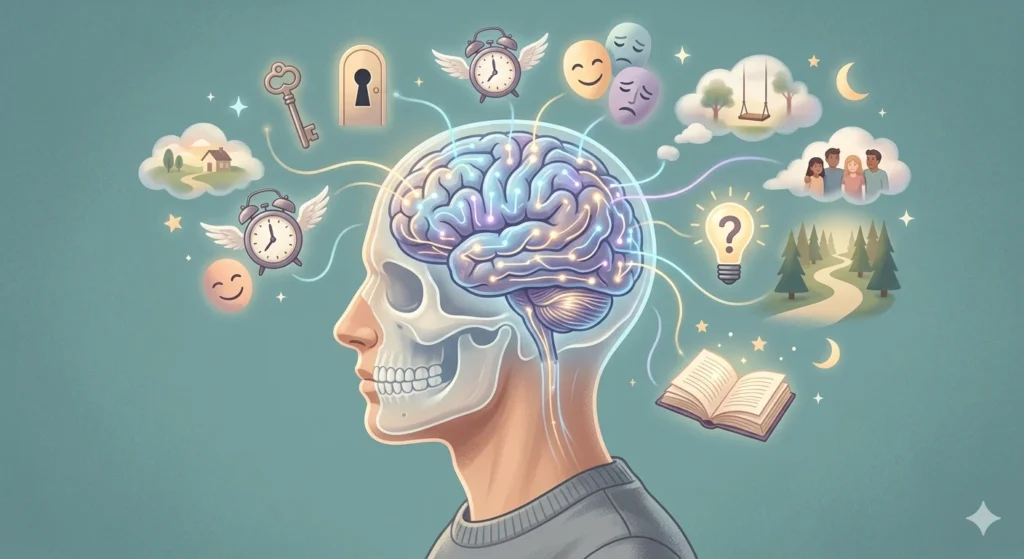
Many people search for the psychology behind dreams about someone because dreams involving specific people often feel emotionally powerful.
Dreaming about someone does not always mean they are thinking about you. Instead, the person may symbolize:
- An emotion
- A memory
- A personality trait
- A hidden desire
- An unresolved relationship
- A lesson from the past
For example:
- Dreaming about an ex-partner may symbolize emotional healing or unfinished emotions.
- Dreaming about a celebrity may reflect ambition, admiration, or identity.
- Dreaming about a stranger may represent unknown parts of yourself.
- Dreaming about family members may reflect security, fear, responsibility, or emotional attachment.
The subconscious often uses people symbolically rather than literally.
Freud’s Method of Dream Interpretation
Sigmund Freud became one of the most influential dream theorists in history. His theories shaped modern dream analysis psychology.
Freud believed dreams reveal hidden desires and unconscious wishes that people suppress during waking life.
According to Freud’s method of dream interpretation:
- Dreams contain hidden meanings.
- The subconscious disguises desires through symbols.
- Many dreams connect to childhood experiences.
- Dreams reveal emotional conflict and repression.
Freud divided dreams into two layers:
Manifest Content
The literal storyline of the dream.
Example:
You dream about missing a train.
Latent Content
The hidden psychological meaning.
Example:
Missing a train may symbolize fear of missed opportunities or anxiety about life direction.
Freud believed understanding latent meaning helps uncover hidden emotional truths.
Although some of Freud’s theories are debated today, his influence on dream interpretation remains enormous.
Carl Jung and Dreams: The Deeper Spiritual Mind
Carl Jung expanded dream analysis beyond repression and hidden desires.
Jung believed dreams guide people toward emotional balance, self-awareness, and personal transformation.
Unlike Freud, Jung focused heavily on:
- Archetypes
- Spiritual growth
- Symbolism
- The collective unconscious
- Personal development
Jung believed certain symbols appear universally across cultures.
Examples include:
- Water → emotions
- Shadow → hidden self
- Hero → growth and courage
- Death → transformation
- Journey → life path
According to Jungian dream interpretation online methods, dreams help individuals understand deeper psychological truths and become emotionally whole.
Today, many modern therapists combine Jungian analysis with mindfulness and trauma healing.
Dream Theorists Who Changed Psychology
Several dream theorists shaped how we understand dreams today.
Sigmund Freud
Focused on:
- Repressed desires
- Childhood conflict
- Hidden impulses
- Sexual symbolism

Carl Jung
Focused on:
- Archetypes
- Spiritual symbolism
- Personal growth
- The collective unconscious
Alfred Adler
Believed dreams reflect:
- Social struggles
- Goals
- Inferiority feelings
- Personal motivation
Modern Neuroscientists
Focus on:
- Brain activity
- Emotional regulation
- REM sleep
- Memory processing
Together, these dream theorists transformed dream interpretation from superstition into psychological exploration.
Do Dreams Reflect Reality?
Another highly searched question is: “Do dreams reflect reality?”
In many cases, yes — emotionally.
Dreams may not show reality literally, but they often reflect:
- Emotional truth
- Hidden fears
- Personal desires
- Anxiety
- Relationship tension
- Self-image issues
- Stress and burnout
For example:
- A dream about drowning may reflect emotional overwhelm.
- A dream about success may reflect ambition.
- A dream about losing teeth may reflect insecurity.
- A dream about being late may reflect pressure or fear of failure.
Dreams often exaggerate emotions symbolically so the subconscious can process them more clearly.
Common Dream Symbols and Their Hidden Meanings
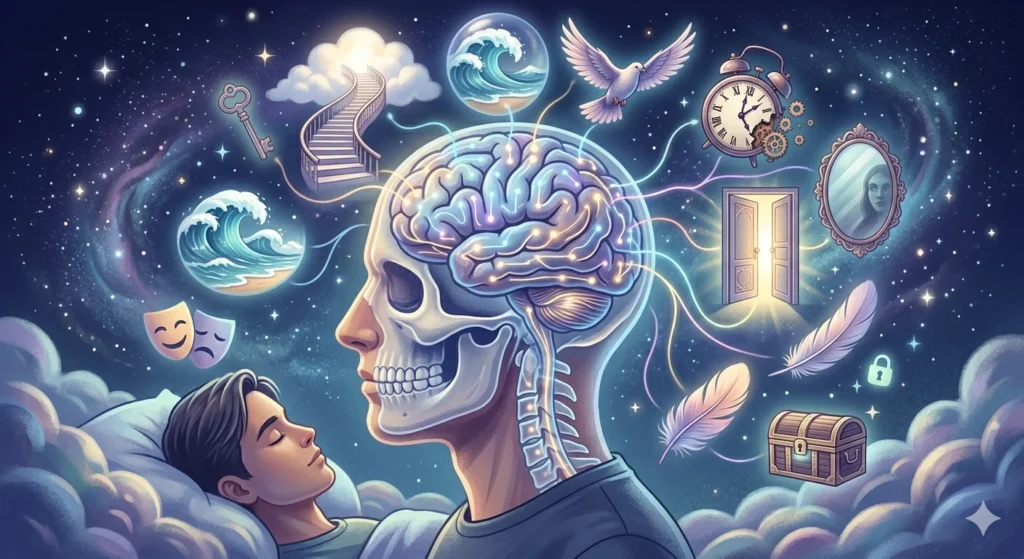
Dream symbolism varies by person, but certain themes appear repeatedly across cultures.
Dream About Flying
Possible meanings:
- Freedom
- Ambition
- Escaping limitations
- Confidence
Dream About Falling
Possible meanings:
- Fear of failure
- Lack of control
- Emotional insecurity
- Stress
Dream About Water
Possible meanings:
- Emotional depth
- Healing
- Spiritual growth
- Emotional overwhelm
Dream About Being Chased
Possible meanings:
- Avoidance
- Fear
- Anxiety
- Unresolved conflict
Dream About Losing Teeth
Possible meanings:
- Self-image anxiety
- Fear of aging
- Loss of confidence
- Communication struggles
Dream About Death
Possible meanings:
- Transformation
- Endings
- New beginnings
- Personal change
The emotional tone of the dream is often more important than the symbol itself.
Is It Good to Dream Every Night?
Many people wonder: “Is it good to dream every night?”
Dreaming every night is completely normal.
In fact, most people dream multiple times during sleep, especially during REM cycles. Some simply remember dreams more clearly than others.
Frequent dreaming may be linked to:
- Active imagination
- Emotional sensitivity
- Stress
- Creativity
- Better dream recall
- Interrupted sleep patterns
Dreaming itself is healthy because it helps emotional processing and memory organization.
However, frequent nightmares or emotionally disturbing dreams may indicate:
- Anxiety
- Trauma
- Sleep problems
- Chronic stress
- Emotional overload
If dreams consistently harm sleep quality, professional support may help.
Recurring Dreams and Hidden Emotional Patterns
Recurring dreams usually happen when the subconscious mind keeps trying to process unresolved emotions.
Common recurring dream themes include:
- Being chased
- Falling
- Missing exams
- Losing teeth
- Being trapped
- Arriving late
- Getting lost
Recurring dreams often point toward:
- Emotional stress
- Unresolved fear
- Relationship conflict
- Self-doubt
- Major life transitions
Instead of ignoring recurring dreams, ask:
“What emotional issue keeps repeating in my waking life?”
Often, recurring dreams decrease once emotional awareness improves.
Spiritual Meaning of Dreams and Hidden Desires
Across history, many cultures believed dreams carried spiritual messages.
Ancient civilizations viewed dreams as:
- Divine communication
- Warnings
- Healing visions
- Guidance from ancestors
- Spiritual awakening
Today, spiritual dream interpretation remains popular among people exploring mindfulness and personal growth.
Some spiritual interpretations include:
- Flying dreams → spiritual freedom
- Water dreams → emotional cleansing
- Light dreams → enlightenment
- Death dreams → rebirth and transformation
- House dreams → the inner self
Even from a spiritual perspective, dreams often connect deeply to emotional healing and hidden desires.
How to Analyze Your Dreams Step by Step
You don’t need to be a professional psychologist to begin understanding your dreams.
Step 1: Keep a Dream Journal
Write dreams immediately after waking.
Record:
- Symbols
- Emotions
- People
- Colors
- Conversations
- Locations
Even small details matter.
Step 2: Focus on Emotions
Ask yourself:
“How did I feel during the dream?”
Fear, happiness, guilt, excitement, confusion, or relief often reveal the dream’s core meaning.
Step 3: Connect Dreams to Real Life
Look for emotional parallels:
- Stress at work
- Relationship issues
- Financial pressure
- Personal goals
- Fear of rejection
Dreams usually reflect emotional themes already present in waking life.
Step 4: Identify Repeating Symbols
Recurring symbols often indicate unresolved emotions.
Step 5: Reflect Instead of Panicking
Dreams are symbolic — not literal predictions.
Use dreams for self-awareness rather than fear.
Real-Life Examples of Dreams and Hidden Desires
Example 1: The Missing Train
A woman repeatedly dreamed about missing trains.
After reflection, she realized the dream mirrored her fear of missing life opportunities and delaying personal goals.
Example 2: The Endless Hallway
A student dreamed of walking through endless hallways.
The dream reflected uncertainty about career direction and fear of making the wrong choice.
Example 3: Flying Over a City
A man dreamed of flying freely above buildings.
The dream symbolized his desire for independence after leaving a stressful job.
Example 4: Being Chased
A business owner dreamed of being chased every night.
Later, she realized she was avoiding financial stress and emotional burnout.
These examples show how dreams often reflect real emotional experiences.
Benefits of Understanding Dreams and Hidden Desires
Dream interpretation can provide powerful emotional and psychological benefits.
1. Greater Self-Awareness
Dreams reveal thoughts and emotions that may remain hidden consciously.
2. Emotional Healing
Understanding dreams can help process grief, fear, trauma, or stress.
3. Better Decision-Making
Dreams sometimes highlight emotional truths we ignore during daily life.
4. Improved Creativity
Artists, musicians, writers, and innovators often gain inspiration from dreams.
5. Reduced Anxiety
Recognizing subconscious fears can help reduce emotional pressure.
6. Stronger Mindfulness
Dream awareness increases emotional connection with yourself.
Common Mistakes People Make When Interpreting Dreams
Taking Dreams Literally
Dreams usually speak symbolically.
A dream about death often symbolizes transformation — not actual death.
Ignoring Emotional Context
The emotional tone matters more than random objects.
Using Generic Dream Dictionaries Only
Personal experiences shape dream meaning.
A snake may symbolize fear for one person and healing for another.
Overanalyzing Every Detail
Not every dream contains a life-changing message.
Sometimes the brain simply processes daily stress.
Forgetting to Journal Dreams
Dreams fade quickly after waking.
Recording them improves recall and pattern recognition.
Modern Technology and Dream Analysis in 2026
Dream interpretation has entered the digital era.
Popular modern tools include:
AI Dream Analysis Apps
Apps analyze recurring dream themes, emotional patterns, and symbolism.
Some people even search for Jungian dream analysis ChatGPT tools for personalized interpretation.
Sleep Trackers
Wearable devices monitor REM cycles and sleep quality.
Voice Dream Journals
Voice-to-text technology allows instant recording after waking.
Meditation Apps
Mindfulness apps now include dream reflection features.
Lucid Dreaming Technology
Some devices attempt to trigger dream awareness using sound and light cues.
While technology helps track dreams, personal emotional interpretation remains most important.
Cultural Views on Dreams Throughout History
Dream interpretation has existed across civilizations for thousands of years.
Ancient Egyptians
Believed dreams carried messages from gods.
Ancient Greeks
Used dreams for healing and spiritual guidance.
Islamic Tradition
Dreams were sometimes viewed as meaningful spiritual experiences.
Native American Traditions
Dreams connected individuals to spiritual wisdom and nature.
Modern Psychology
Views dreams as reflections of subconscious emotional processing.
Despite cultural differences, humans across history consistently viewed dreams as emotionally meaningful.
Why Some Dreams Feel So Real
Some dreams feel intensely realistic because the emotional centers of the brain remain highly active during REM sleep.
During vivid dreams:
- Emotions become amplified.
- Logical thinking decreases.
- Visual imagery becomes stronger.
- The brain reacts emotionally as if events are real.
This explains why people wake up:
- Crying
- Laughing
- Sweating
- Scared
- Emotionally affected
Emotionally powerful dreams often leave lasting impressions because the subconscious brain processes them deeply.
Can Dreams Predict the Future?
Many people believe dreams occasionally predict future events.
Scientifically, there is limited evidence that dreams literally predict the future. However, dreams can sometimes:
- Detect emotional patterns
- Recognize hidden intuition
- Reflect subconscious observations
- Anticipate outcomes emotionally
For example, your subconscious may notice relationship tension before your conscious mind fully recognizes it.
This can make certain dreams feel predictive.
Most psychologists view “future dreams” as subconscious intuition rather than supernatural certainty.
Practical Tips to Understand Dreams Better
Reduce Screen Time Before Bed
Digital overload can weaken dream recall.
Sleep Consistently
Stable sleep improves REM cycles.
Practice Mindfulness
Meditation increases dream awareness.
Set Intentions Before Sleep
Ask yourself:
“What does my subconscious want me to understand?”
Keep a Notebook Nearby
Write dreams immediately after waking.
Pay Attention to Repeating Themes
Recurring emotions often reveal hidden desires.
Avoid Panic Interpretation
Dreams are guides for reflection — not reasons for fear.
Frequently Asked Questions About Dreams and Hidden Desires
Do dreams reflect reality?
Dreams often reflect emotional reality, stress, desires, fears, and subconscious thoughts rather than literal events.
Why do we dream according to science?
Science suggests dreams help emotional processing, memory organization, stress regulation, and subconscious integration.
Does dreaming about someone mean they miss you?
Not necessarily. The person often symbolizes emotions, memories, or unresolved thoughts within your own mind.
Is it healthy to dream every night?
Yes. Dreaming is a normal and healthy part of sleep.
Can dreams reveal hidden desires?
Yes. Many psychologists believe dreams symbolically reveal emotions and desires hidden from conscious awareness.
What are the most common dream symbols?
Flying, falling, water, being chased, losing teeth, death, and traveling are among the most common dream themes.
What is Freud’s method of dream interpretation?
Freud believed dreams contain symbolic representations of unconscious desires and hidden emotional conflict.
Who are the main dream theorists?
Freud, Jung, Adler, and modern neuroscientists are among the most influential dream theorists.
Why do recurring dreams happen?
Recurring dreams often reflect unresolved emotions, stress, fear, or repeating life patterns.
Can AI analyze dreams accurately?
AI tools can identify patterns and symbols, but personal emotional context remains essential for accurate interpretation.
Key Takeaways
- Dreams and hidden desires are closely connected through the subconscious mind.
- Dreams often reflect emotional truth rather than literal reality.
- Freud focused on hidden desires and repression.
- Jung focused on archetypes, balance, and spiritual growth.
- Emotional context matters more than isolated symbols.
- Dream journaling improves self-awareness and emotional understanding.
- Modern science supports the connection between dreams, REM sleep, and emotional processing.
- AI dream analysis tools are growing rapidly in 2026.
- Recurring dreams usually point toward unresolved emotions or stress.
- Understanding dreams can support emotional healing, creativity, and personal growth.
Conclusion
Dreams are far more than random images that appear during sleep. They are emotional mirrors, symbolic stories, and subconscious messages that reveal hidden fears, desires, memories, and possibilities.
In today’s fast-moving world, understanding dreams and hidden desires offers something many people desperately need: deeper self-awareness. Whether your dreams feel inspiring, confusing, beautiful, or unsettling, they often carry valuable emotional insight.
By paying attention to recurring themes, emotions, and symbols, you can better understand your inner world, strengthen emotional clarity, and make more conscious life decisions. Modern psychology, neuroscience, and mindfulness practices now support what ancient cultures always believed — dreams matter.
So tonight, before you sleep, ask yourself one simple question:
“What is my subconscious trying to teach me?” 🌙✨
You may discover that your dreams already know the answers you’ve been searching for.

“Evelyn Hartwell, a spiritual dream guide at DreamyDrug.com, interprets symbolic dreams and emotional patterns to help readers understand their inner world.”