The Mystical Bridge Between Dreams and Destiny
Across Asia, dreams aren’t just random flickers of the sleeping mind — they are messages, symbols, and spiritual signals. From Japan’s first dream of the New Year (Hatsuyume) to India’s prophetic dream traditions, Asian culture dream beliefs reveal how deeply the subconscious connects to everyday life.
In 2025, as more people explore mindfulness, ancestral wisdom, and holistic living, ancient Asian dream interpretations are finding new relevance. They help people decode emotional truths, divine omens, and align with spiritual energy — blending old traditions with modern psychology.
What Are Asian Culture Dream Beliefs?
Asian culture dream beliefs refer to traditional interpretations and symbolic meanings attached to dreams across Asian societies. These beliefs often reflect local spirituality, mythology, and values.
In many Asian traditions:
- Dreams connect humans and the divine.
- Symbols in dreams predict the future or reflect inner harmony.
- Dream rituals are used for protection, guidance, and manifestation.
For example:
- In Chinese culture, dreams are linked to Qi (life force) and the balance of yin and yang.
- In Japanese belief, seeing Mount Fuji in your first dream of the year is lucky.
- In Hinduism, dreams can be divine messages from gods or ancestors.
These perspectives show how dreams are not merely personal — they are cultural maps of meaning.
Explore Native American Dream Beliefs and Spiritual Interpretations
The Cultural and Spiritual Importance of Dreams in Asia
Dreams have been part of Asia’s spiritual DNA for thousands of years. Ancient texts, from India’s Upanishads to China’s Zhougong Jie Meng (Book of Dreams), document interpretations that blend psychology, religion, and astrology.
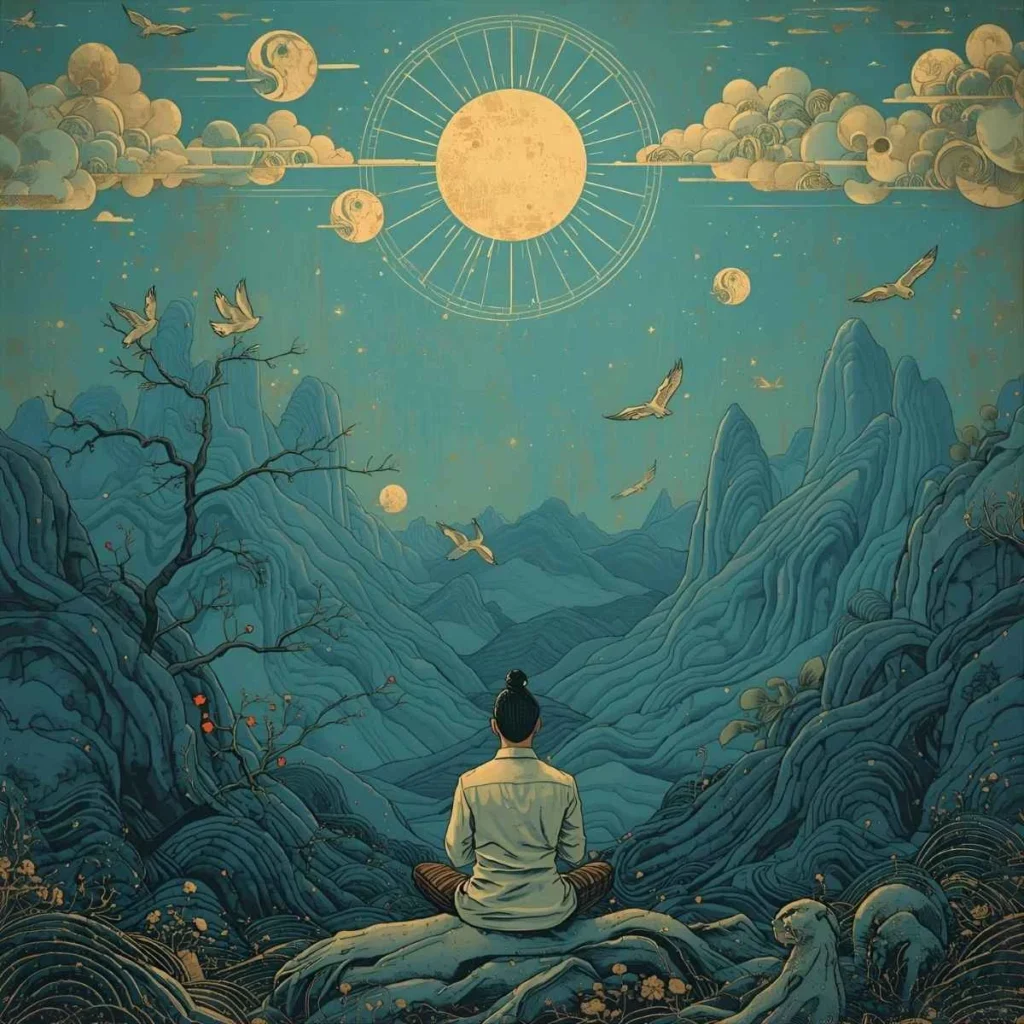
Here’s how dreams function culturally across regions:
| Region | Cultural View of Dreams | Common Belief Example |
|---|---|---|
| China | Dreams reveal spiritual balance | Dreaming of water = wealth or emotional clarity |
| Japan | Dreams guide fortune and purity | Mount Fuji dream = prosperity in the coming year |
| India | Dreams reveal karma and divine will | Seeing deities in dreams = upcoming blessings |
| Korea | Dreams connect ancestors and the living | Pig dreams = prosperity or childbirth |
| Thailand | Dreams reflect moral or karmic energy | Dreaming of monks = good luck or protection |
These traditions show how dreams in Asian cultures are intertwined with spiritual and moral values — acting as both mirrors and messengers of the soul.
The Benefits of Understanding Asian Dream Beliefs
Learning about Asian dream beliefs offers more than cultural insight — it enhances your emotional intelligence and spiritual awareness.
Here are the key benefits:
- Self-Awareness: Dream symbols reveal hidden emotions or conflicts.
- Cultural Connection: Understanding ancient beliefs deepens respect for Asian heritage.
- Spiritual Growth: Interpreting dreams can align you with your higher purpose.
- Mindfulness Practice: Encourages reflection and balance, essential in 2025’s fast-paced life.
- Emotional Healing: Dreams act as subconscious therapy for stress and grief.
- Manifestation Clarity: Many Asian traditions link dream imagery with attraction of luck or success.
- Enhanced Intuition: You begin to trust your inner guidance more.
In short, decoding your dreams through an Asian lens can be a form of spiritual technology — ancient wisdom meeting modern wellness.
Common Dream Symbols and Their Meanings in Asian Cultures
Dreams in Asia are rich with symbolism. While meanings vary by region, many share universal patterns of prosperity, protection, and renewal.
🌕 Water
- China & Japan: Flowing water = success, but dirty water = conflict.
- Hinduism: Water signifies purification and emotional renewal.
🐉 Dragon
- Chinese Belief: Power, fortune, and divine protection.
- Korean Myth: Ancestral blessing and authority.
🌸 Flowers
- Japan: Cherry blossoms = impermanence and beauty.
- India: Lotus = spiritual awakening.
🐍 Snake
- China: Transformation or hidden wisdom.
- India: Kundalini energy and divine power.
🐷 Pig
- Korea & Vietnam: Wealth and fertility.
How to Interpret Your Dreams the Asian Way: A Step-by-Step Guide
You can apply Asian culture dream beliefs to your own dream life by following these steps:
Step 1: Recall Immediately
Keep a dream journal beside your bed. Write down the symbols, emotions, and colors as soon as you wake up.
Step 2: Notice Repetition
If you keep seeing the same image (like water, snakes, or temples), it could carry a spiritual message.
Step 3: Understand Cultural Context
Look up meanings from Asian traditions — for instance, a lotus in India means spiritual awakening, while in Japan it means purity.
Step 4: Reflect Emotionally
Ask yourself, “How did I feel in that dream?” Emotions are keys to understanding hidden fears or hopes.
Step 5: Balance Energy
Asian philosophy connects dreams to life energy (Qi or Prana).
If your dreams feel chaotic, try balancing your energy through meditation, breathwork, or journaling.
Step 6: Seek Guidance
In many cultures, elders or monks help interpret dreams — symbolizing the importance of shared wisdom.
Modern Relevance: Dream Beliefs in 2025
Dream interpretation is evolving in 2025 — blending tradition with technology.
- AI dream apps now include Asian symbol libraries for cultural accuracy.
- Mindfulness therapy incorporates Buddhist and Taoist dream principles.
- Digital astrology communities use ancient dream oracles alongside modern tools.
- Cultural preservation efforts are reviving texts like Zhougong Jie Meng for younger generations.
In a world dominated by logic and data, more people are turning back to Asian spiritual frameworks for balance — seeing dreams as soulful navigation tools, not random noise.
Real-Life Examples: Dreams That Shaped Asian History
Dreams have influenced real events in Asia for centuries:
- Emperor Ashoka (India) dreamt of Buddha, inspiring his conversion to Buddhism.
- Chinese generals reported dreams that warned them of betrayal — changing military outcomes.
- Korean queens were said to dream of dragons before giving birth to royal heirs.
These stories remind us that dreams have been trusted guides — shaping destiny, leadership, and moral choices.
Common Mistakes When Interpreting Dreams
Even though dream interpretation feels mystical, it can be misunderstood. Avoid these common pitfalls:
- Over-Generalizing Symbols: A snake doesn’t mean the same thing in every culture.
- Ignoring Emotions: The way you feel in a dream often matters more than the symbol itself.
- Taking Dreams Too Literally: Dreams are metaphors, not always predictions.
- Neglecting Context: Time, place, and life events shape dream meanings.
- Forgetting Balance: In Asian philosophy, both yin (shadow) and yang (light) must coexist — meaning both good and bad dreams can bring wisdom.
Expert Tips for Applying Dream Wisdom in Daily Life
- Start your morning mindfully: Reflect on your dreams before checking your phone.
- Use dream symbols as journaling prompts: “What does this symbol say about my emotions?”
- Incorporate feng shui or energy cleansing rituals if your dreams feel heavy or anxious.
- Study Asian mythologies: They offer rich background stories behind recurring symbols.
- Stay open-minded: Dreams are as personal as fingerprints — cultural frameworks guide, not dictate.
FAQs About Asian Culture Dream Beliefs
1. Are dream meanings the same across all Asian cultures?
No — meanings differ by country, religion, and era. However, themes like harmony, karma, and prosperity are common.
2. How can I find accurate dream interpretations?
Consult authentic sources — like translated dream dictionaries or cultural scholars — not just random online summaries.
3. Can modern science explain these dream beliefs?
While neuroscience sees dreams as memory processing, cultural beliefs add a spiritual dimension that science often overlooks.
4. Do Asian dream beliefs align with astrology?
Yes, many overlap — especially in Chinese and Hindu traditions where lunar cycles influence dream timing.
5. Should I act on my dreams?
You can reflect on them, but avoid rash decisions. Let patterns and emotions guide gradual self-awareness.
6. Are dream beliefs still relevant in 2025?
Absolutely. They bridge ancient spirituality with modern mental wellness — offering a holistic way to understand the self.
Key Takeaways
- Asian culture dream beliefs blend spirituality, philosophy, and symbolism.
- They teach that dreams can reveal balance, guidance, and destiny.
- In 2025, these traditions are being reimagined through AI, mindfulness, and cultural revival.
- Applying these beliefs can deepen emotional and spiritual intelligence in everyday life.
Conclusion: Awakening Through Dreams in 2025
Dreams are not random — they’re mirrors of your inner world, reflections of cultural heritage, and sometimes whispers from beyond. By embracing Asian culture dream beliefs, you honor both your subconscious and the ancient wisdom that guides millions across generations.
In 2025’s fast-changing world, these traditions remind us to slow down, listen, and trust what the night reveals. So tonight, when you close your eyes, remember — your dreams may be speaking the language of your soul.

“Julian Rowe, a dream symbol researcher at DreamyDrug.com, explains spiritual messages, emotional visions, and subconscious patterns through clear, calming insights.”